Transformative Mental Health Care at Rays of Hope Mental Health Services, PC

Story by Jeanie Edgmon
How Dr. Cynthia Heck and Richard Goddard are reimagining psychiatric care as a catalyst for beautiful, whole lives.
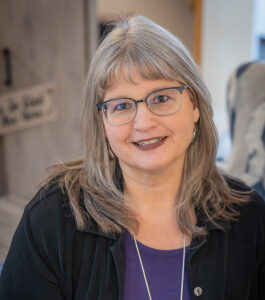 Dr. Cynthia Heck has a metaphor she returns to often when describing her vision for psychiatric care: the caterpillar and the butterfly. “We don’t tape wings over the caterpillar,” she explains, her voice warm with conviction. “Transformation means the original version is no longer recognizable. We partner with people to become healthy and whole, to truly become a new creation.”
It’s an image that captures something essential about Rays of Hope Mental Health Services, the Shawnee Mission-based practice Dr. Heck founded in 2024. Here, psychiatric care isn’t the central theme of someone’s life; it’s the catalyst that allows them to pursue their amazing and beautiful achievements. It’s the difference between 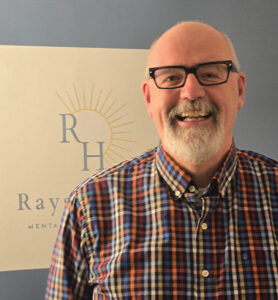 managing symptoms and unlocking potential, between surviving and truly living.
For Dr. Heck, this philosophy isn’t theoretical. She knows what it means to feel hopeless, to believe that joy and health might be possible for others but not for herself. Her own journey through trauma, chronic pain, and multiple losses left her developing survival coping skills that kept her afloat but not truly well. “I remember feeling hopeless,” she says quietly. “I developed some unhealthy coping skills out of survival and did not believe there could be hope or joy for me.”
What changed? Reliance on her Christian faith, courageous work with skilled helpers, a supportive community, and an ongoing commitment to address root causes rather than just symptoms. Today, she walks in joy and health, and that transformation fuels everything she does. “There is no greater joy than partnering with someone and seeing them walk in greater health and hope,” she says. “I know it’s possible because I’ve lived it.”
Psychiatry with a Difference
 The Problem: Duct Tape on a Check Engine Light
Dr. Heck’s path to opening Rays of Hope began with a growing frustration during her years working in community mental health. After 30+ years of mental health experience and earning her Doctor of Nursing Practice degree from the University of Missouri-Columbia in 2019, she found herself part of a broken system firsthand. “There are not enough therapists to serve the hurting.” “Without concentrated therapeutic interventions, medication became like duct tape, just holding broken people together, but not real transformation.” “I wanted more for my patients,” she explains.
The statistics tell a sobering story: nearly 60 percent of people who receive mental health care do so from their primary care providers. While PCPs are trained to treat depression and anxiety, they’re often managing patients with multiple medical complaints and comorbidities in fifteen-minute appointments. Something inevitably gets overlooked or unaddressed. Some primary care providers prefer to focus on physical health concerns and refer to a mental health specialist for the mental health care of their patients. The fifteen-minute appointment slot can limit providers to treat symptoms rather than address root causes. Meanwhile, patients who secure referrals to psychiatric nurse practitioners or psychiatrists often wait months, sometimes even a year, for their first appointment. For someone in crisis, for someone barely holding on, the wait can be devastating. Dr. Heck decided something had to change.

“I have never had a provider that truly understands, listens and cares about my mental health until I met with Dr. Cynthia Heck!!! I only wish I had found her sooner. I literally drive 51 miles one way just to see her because she’s that good! I would drive another 51 if I had to. I would highly recommend her and do to everyone I know. Also, I didn’t have to wait Months to get in to see her or even go on a waiting list. I thank God daily that I’ve found her for my care!!!!” ~Dawn
Reversing the Model: Collaboration as Innovation
The solution Dr. Heck developed is elegantly simple and radically different: reverse the model. Rays of Hope works primarily with patients who already have a therapist but need psychiatric medication management. Most patients are referred by their therapist (or primary care), creating a seamless collaboration from the start.
“Research shows that patients do better when they receive both therapy and medication management,” Dr. Heck explains. “But it’s not just about having both—it’s about having them work together.” She pauses, then offers concrete examples. “Sometimes symptoms are so interfering or intense that medication is needed to decrease the intensity so people can do the work of therapy. But in other situations, unless you resolve the underlying issue—the unforgiveness, the negative self-talk, the unprocessed trauma, the poor coping skills—it won’t matter how much medication someone is on.”
The impact is immediate and measurable: Rays of Hope can see new patients within two weeks, not two months. Appointments are thirty minutes for medication checks and sixty to ninety minutes for evaluations—double or triple the industry standard. “Patients deserve to be heard and cared for,” Dr. Heck says firmly. “It takes a lot to seek mental health care, to overcome stigma, to be ready for change. We are here for them, not the other way around.”

“My colleagues and I have enjoyed working with Dr. Heck over the last year due to her quick turn around in getting patients evaluated for their mental health needs, especially during times when mental health providers are at such a high demand.” ~ Kim Le, APRN FNP-C
“I have referred many clients to Dr. Heck and Rays of Hope in the past year. As a therapy provider, I always receive prompt acknowledgement from Dr. Heck of the referral and a treatment plan follows soon after. I have found communication and collaboration with Dr. Heck and Rays of Hope to be fast and efficient, better than any other psychiatric provider I have worked with in the past.” ~ Dr. Cornine
The Sacred Practice of Collaboration
To Dr. Heck, collaboration isn’t a buzzword or a checkbox. It’s a sacred practice woven into every aspect of care.
“We only see our part of the elephant,” she explains, invoking the parable of blind men describing an elephant by touch alone. “The patient’s therapist likely sees them weekly. Their primary care provider is managing physical health conditions that impact mental health. We need each other to see the whole picture and best care for our patients…together.”
The practical commitment is substantial. Dr. Heck strongly encourages patients to sign releases of information so her team can communicate with their therapist and primary care provider. They share diagnoses and treatment plans with PCPs to ensure there’s no crossover in prescribing or potentially harmful medication interactions. They coordinate with therapists about progress and setbacks. “It takes more time,” she acknowledges. “But I used to be a certified nurse case manager, and I saw the rewards of coordination of care. Patients do better when their treatment team is on the same page.”
For the medical professionals reading this, Dr. Heck offers a promise: “You can trust us to care for the mental health needs of your patients. We value collaboration. We are committed to communicating with you.” In a fragmented healthcare system, this commitment to partnership feels revolutionary.
Root Diggers, Not Symptom Managers
Dr. Heck describes herself and her team as “root diggers,” and this philosophy shapes every clinical decision. “Not everything is pathological,” she says, a statement that feels both obvious and radical in a mental health landscape often dominated by quick fixes.
Take anxiety, for example. “Any prescriber can prescribe medication for anxiety,” Dr. Heck notes. “But without determining the cause, are you treating the right thing? Is the anxiety from trauma? Social anxiety? ADHD? Being on the autism spectrum? What is driving the anxiety? Let’s treat the root.”
This approach leads to surprising interventions, or sometimes, to no medication at all. Before prescribing sleep medication, Dr. Heck works with patients on sleep hygiene and screens for medical sleep disorders. Before adding an anxiety medication, she explores lifestyle influences such as caffeine intake or unhealthy thought patterns. For irritability, she may ask whether the patient is juggling more commitments than any human was meant to carry. Perhaps what they need isn’t medication but permission to set boundaries.
“We grieve loss, not medicate it,” she says simply when discussing the difference between clinical depression and natural grief. Sometimes the best prescription is better nutrition, intentional movement, or getting outside of oneself through volunteering or connection.
When medication is needed, and it often is, Dr. Heck prescribes evidence-based treatments that are safe and effective. But she also has honest conversations about readiness for deeper work when medication alone won’t solve the underlying issue. “We truly want someone well in their body, soul, and spirit,” she says. “If medication will help, we’ll explore it. But there are times when medication would just keep someone in a cycle of unhealth.”
This holistic approach extends to spiritual health. Both Dr. Heck and her colleague Richard Goddard are followers of Christ and comfortable integrating Biblical principles when invited. But their patient-centered approach means people of all beliefs are welcome and respected. “We are created with a soul, spirit, and body,” Dr. Heck explains. “Each area is important for transformative health.”
 Meeting the Moment: Growth and Expanded Access
Less than a year after opening her doors full-time, Dr. Heck has already expanded the practice—a testament to both the need and the effectiveness of her approach. The addition of Richard Goddard Jr., APRN, PMHNP-BC, LPCC, is more than just hiring another provider; it’s a strategic move to serve populations with under met needs.
Like Dr. Heck, Goddard was a Licensed Professional Counselor before becoming a nurse practitioner, bringing twenty-five years of clinical and behavioral health experience across nursing, counseling, and psychiatry. His specialties fill critical gaps: addiction, trauma (particularly for first responders), men’s issues, and teenagers aged thirteen and up.
“I was so happy to have Richard join,” Dr. Heck says. “He’s skilled and compassionate, and he shares the values of Rays of Hope, so it was an easy hire.” But the significance goes beyond compatibility. Goddard’s expertise allows Rays of Hope to reach patients who might otherwise wait months for specialized care, such as adolescents, those struggling with addiction, first responders carrying occupational trauma, and men reluctant to seek help for sensitive mental health challenges.
The practical impact is straightforward: more people can be seen more quickly. As demand for mental health services continues to grow, fueled by increasing rates of anxiety, depression, ADHD, and autism spectrum diagnoses, as well as COVID’s lingering mental health toll, Rays of Hope is responding in real time.
Life on the Other Side
Dr. Heck returns often to a simple truth: “We may experience challenges, grief, loss, or trauma; but there is hope for a vibrant life even in the midst of suffering. We aim to illuminate the path to hope until patients can see it for themselves.”
This is the promise of transformative care. Not that mental health struggles disappear, but that they don’t define the story. Not that psychiatric care becomes the center of life, but that it creates space for patients to pursue their own beautiful and amazing achievements—whether that’s rebuilding relationships, returning to work, rediscovering creativity, or simply experiencing joy again.
“Rays of Hope is a place where people are heard, cared for, supported, and valued,” Dr. Heck says. “We want you well. We are here for you, not the other way around. We are invested in our patients.”
The vision is clear: not a caterpillar with taped-on wings, but a butterfly in flight. Not symptom management that keeps people surviving (or even stuck), but transformative care that helps people truly live. In a mental health landscape often characterized by long waits, brief appointments, and fragmented care, Rays of Hope is offering something different, and something desperately needed.
For Dr. Heck, this work is personal. She remembers what it felt like to believe hope was for others but not for her. Now, she dedicates her career to ensuring that no one stays stuck in that belief. Because she knows, not theoretically, but intimately, that transformation is possible and there is truly hope for all.
The butterfly was always there, waiting. Sometimes, it just needs the right environment to emerge.

Rays of Hope Mental Health Services serves patients aged 13 and up across the Kansas City metro area, both in person and via telehealth. For more information, to schedule an appointment, or refer, call (816) 366-8477, visit raysofhopemhs.org or write to dr.heck@raysofhopemhs.org