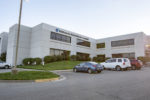
STROKE CARE REIMAGINED – How MidAmerica Rehabilitation Hospital and community partners are transforming outcomes across the continuum.
Article by Ann E. Butenas
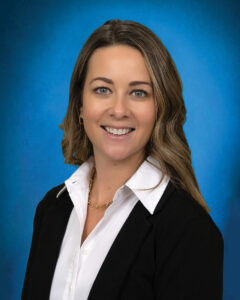
Jenn Saathoff
When stroke strikes, every second counts, but what happens in the hours, days, and weeks that follow can be just as critical to a patient’s recovery. In the Kansas City metropolitan area, a unique collaborative effort is transforming stroke care by connecting healthcare professionals across the entire treatment spectrum, from the emergency room to rehabilitation and beyond. Through strategic partnerships and shared expertise, local hospitals and rehabilitation facilities are working together to ensure that stroke survivors receive coordinated, evidence-based care at every stage of their journey back to independence.
Building Bridges in Stroke Care
The Bi-State Stroke Consortium represents a paradigm shift in how the Kansas City region approaches stroke treatment. This collaborative group brings together professionals from across the stroke care community in Kansas and Missouri, operating in partnership with the American Heart Association to create a seamless continuum of care.
Jenn Saathoff, MHS, L/SLP, serves as both Business Development Director at MidAmerica Rehabilitation Hospital in Overland Park and Co-Chair of the Bi-State Stroke Consortium. From her dual vantage point, she emphasized the consortium’s critical role in aligning best practices across acute care hospital initiatives to ensure the best possible outcomes for stroke patients. The consortium’s mission extends beyond individual institutions, facilitating clinical stroke education and improving patient outcomes through collegiality and collaboration.
The power of this approach lies in its comprehensive scope. The Bi-State Stroke Consortium engages across the region to discuss best practices from acute care through rehabilitation settings and integrating back into the community. The consortium is committed to optimizing stroke continuum of care through quality improvement initiatives, professional networking, and education utilizing evidence-based practices.
This collaborative model reflects a growing understanding in healthcare: stroke recovery isn’t a series of isolated treatments but rather an interconnected process where communication and coordination between providers can significantly impact long-term outcomes.
A Patient’s Perspective: The Long Road Back
For Jay, a 63-year-old from Butler, Missouri, one morning in January 2021 changed everything. “I woke up lopsided,” he recalled. Two days after experiencing warning signs, he suffered a major stroke that left his entire left side paralyzed. At 58, he was forced into early retirement from his business and faced the daunting challenge of relearning basic movements.
After spending February 2021 at Research Medical Center where he regained the ability to walk, Jay’s stroke recovery journey continued for years. Then, a fall resulting from lingering left-side weakness led to a broken hip and an unexpected connection to MidAmerica Rehabilitation Hospital. “I ended up in therapy there with a broken hip. That’s how I met Morgan,” Jay explained, referring to his occupational therapist who recognized the ongoing effects of his stroke.
Working with Morgan and the team at MidAmerica proved transformative. “MidAmerica definitely does what they can to help stroke survivors, that’s for sure,” Jay emphasized. Beyond his individual therapy sessions, he became involved in MidAmerica’s stroke recovery support group, which meets bimonthly and connects survivors throughout the region.
Nearly five years post-stroke, Jay continues his recovery journey with determination. He’s recently had a Vivistim surgically implanted, a device that stimulates the vagal nerve to help speed neurological recovery. Combined with ongoing therapy at KC Ability, Jay has regained considerable function this year. He manages persistent stiffness with Botox injections every three months and works daily on improving function in his left hand.
“You’ve got to be strong and have willpower to try to fight through this recovery,” Jay reflected. “I could see that an older person or somebody that’s not motivated could easily get frustrated and give up.” His message to other survivors is simple: “You can’t give up.”

Beyond the Hospital Walls
What happens when insurance-covered therapy sessions end but recovery continues? That’s where organizations like the American Stroke Foundation step in to fill a critical gap. The Foundation’s mission is to enhance the quality of life for individuals impacted by stroke by strengthening community supports and addressing the social determinants that shape recovery and participation.
“Our partnership creates a seamless continuum of care from hospital to community,” explained Kyle Kropf, OTD, OTR/L, Program Coordinator and Operations Specialist at the American Stroke Foundation. Through their Next Step community wellness programs, run by occupational therapy students and overseen by occupational therapists, survivors continue building skills and regaining confidence alongside peers who understand their journey.
The challenges survivors face after leaving rehabilitation facilities are often practical and deeply personal. Transportation to multiple medical appointments, home modifications, assistance with bathing and meal preparation are needs typically not covered by insurance but can make or break a successful recovery. “This burden frequently falls on family members or caregivers, creating financial and logistical strain during an already challenging recovery period,” noted Caitlin Colteryahn, OTR/L, Program Director at the Foundation.
Perhaps one of the most damaging misconceptions about stroke is the belief that “life is over” after one occurs. “Our work focuses on empowering survivors to regain quality of life by reconnecting with their community,” Colteryahn emphasized. “Through shared experiences and community participation, survivors can build confidence and re-establish meaningful roles in their everyday lives.”
The partnership between MidAmerica Rehabilitation Hospital and the American Stroke Foundation exemplifies how institutional and community resources can work together. MidAmerica’s annual golf fundraiser provides essential funding for the Foundation’s programs, directly helping survivors like those who received care at MidAmerica continue their recovery journey through Next Step programs.
Recognizing the Signs
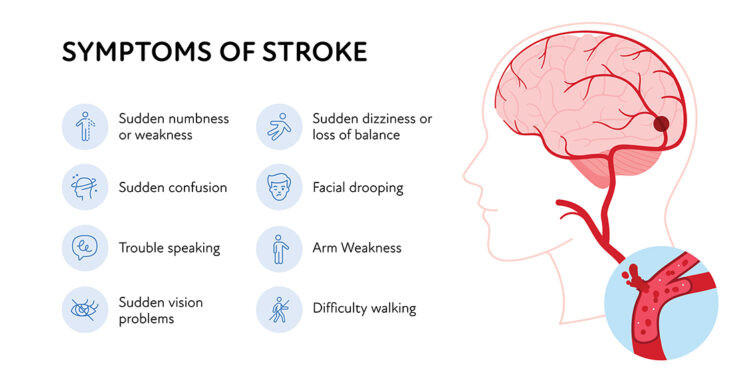
Understanding stroke warning signs can save lives and reduce long-term effects. Healthcare professionals recommend remembering “BE FAST:” Balance loss, Eye trouble, Face drooping, Arm or leg weakness, Speech difficulty, and Time to call 911 immediately.
“It’s important to understand that a stroke can occur in anyone at any age, even without known risk factors,” Colteryahn cautioned. “The faster the signs of stroke are recognized, the sooner lifesaving care can begin.”
Recovery from stroke is highly individualized, and no two survivors face identical challenges. But through collaborative efforts like the Bi-State Stroke Consortium, comprehensive care at facilities like MidAmerica Rehabilitation Hospital, and ongoing community support from organizations like the American Stroke Foundation, stroke survivors in the Kansas City area have access to a network of care that extends far beyond those critical first moments, thereby supporting them through every stage of their journey back to independence.

For more information about rehabilitation services
at MidAmerica Rehabilitation Hospital, visit their website at encompasshealth.com or call their
Overland Park location at 913.491.2400.