OUTPACING MELANOMA – How One Woman’s Loss Sparked a Regional Force for Prevention, Detection, and Hope

Article by Jeanie Edgmon
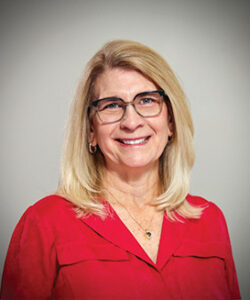
Kelly Klover
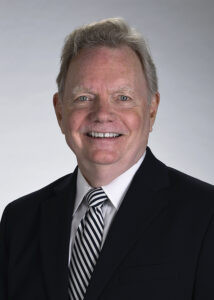
Dr. Gary Doolittle
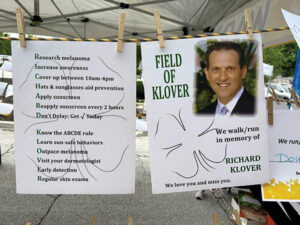
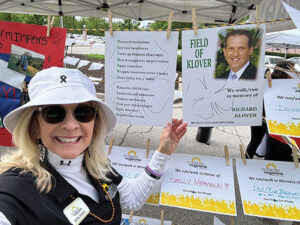
Sixteen years ago, Kelly Klover found herself facing a reality she never expected. Her husband, Richard, had just been diagnosed with a melanoma recurrence at age 45. When Richard was 40, a mole on his back had been surgically removed. ”I thought that meant we had taken care of it – end of story,” Kelly recalls. “I believed we were lucky; friends assured me it was “only skin cancer.” I had no idea how aggressive melanoma could be.” The reality set in quickly. Just seven weeks after learning the severity of the recurrence, Richard passed away at age 46. Kelly soon realized how fast this disease can take someone you love. That moment changed everything. Grief turned into action, and action became a mission. Kelly founded Outpacing Melanoma Foundation (OMF), a volunteer-driven 501(c)(3) with a simple but urgent purpose: to fund melanoma research, expand access to screening, and make sure no one else is blindsided the way her family was.
“I didn’t want other people to get caught off-guard like we were,” Kelly said. “Melanoma is highly curable if caught early. People deserve to know that—and they deserve access to care that makes early detection possible.”
Today, OMF has become one of the region’s most influential nonprofit organizations in melanoma prevention and care. From innovative research to community training, from childhood education to survivor support, the Foundation has woven itself into nearly every layer of melanoma prevention and treatment in Kansas City and beyond.
A Mission with Measurable Impact
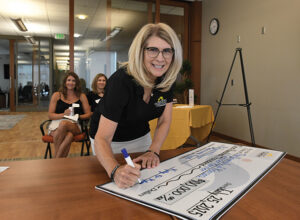
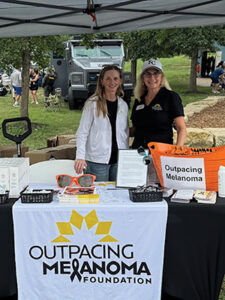
Over the last decade and a half, proceeds from OMF’s annual 5K run/walk have funded more than $1.3 million in programs at The University of Kansas Cancer Center through the Richard A. Klover Melanoma Fund. Those dollars have turned into real, life-changing initiatives that touch hundreds of people each year.
Prevention: Teaching Sun Safety Before Damage Begins
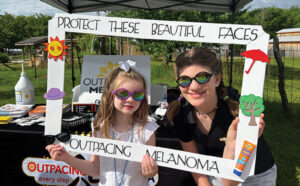
UV exposure during childhood plays a critical role in melanoma risk later in life. That’s why OMF invests heavily in prevention—starting with kids.
Through a partnership with the Masonic Cancer Alliance and the Kansas Cancer Partnership, the Foundation funds Pool Cool, an evidence-based sun-safety program that teaches children ages 5–10 how to protect their skin while enjoying summer activities. Each year, hundreds of kids across Kansas and western Missouri learn lifelong habits that dramatically reduce their future risk.
“We want to prevent melanoma, not just treat it,” Kelly emphasized. “Teaching children sun-smart habits is one of the most important investments we can make.”
Screening: Bringing Expert Eyes to Communities Across the Region
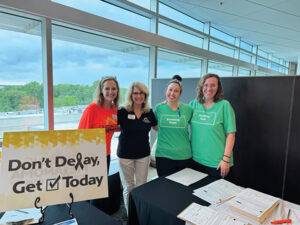
Awareness means little without access. That’s why OMF sponsors free skin-cancer screenings every year on Melanoma Monday at KU Medical Center, as well as at health fairs and community events statewide.
These screenings reach people who might otherwise never see a dermatologist—especially older adults, uninsured residents, and families in rural communities.
Education: Training Primary Care Providers to Recognize Melanoma Early
Not every community has a dermatologist—but nearly every community has a primary-care provider. To close the gap, OMF funds an online education program that trains primary-care practitioners to better recognize, evaluate, and manage malignant melanoma.
This training is complemented by one of the Foundation’s most impactful initiatives: the Rural Dermoscopy Project.
With OMF funding, 80 dermatoscopes have been placed into rural clinics across Kansas—and primary-care doctors have been trained to use them. This tool dramatically improves early detection by helping providers distinguish harmless moles from suspicious lesions.
Dr. Gary Doolittle, a Professor of Medicine at The University of Kansas Medical Center and OMF board member, describes the impact plainly:
“Dermoscopy allows clinicians to visualize skin structure below the surface. This is particularly helpful in distinguishing benign from malignant moles. Dr. Doolittle said. “When you put this technology—and the right training—into the hands of rural primary-care doctors, you are literally saving lives, and giving patients a chance they may not have otherwise had.”
Survivorship: Supporting the Journey After Treatment
Surviving melanoma comes with emotional, physical, and long-term health challenges. To address these unique needs, OMF helped launch the Melanoma Survivorship Clinic—a program designed to support patients long after treatment ends.
From coping with the fear of recurrence to managing the physical effects of surgery, immunotherapy, or targeted treatments, the clinic provides personalized guidance and continuity of care.
“Melanoma survivors often feel isolated,” Kelly said. “We wanted to create a space where they feel understood, supported, and empowered.
The Foundation also sponsors a monthly melanoma-specific support group, ensuring survivors and caregivers never have to navigate the journey alone.

Advancing the Future of Melanoma Treatment
As an NCI-designated Comprehensive Cancer Center, The University of Kansas Cancer Center offers access to the latest clinical trials, including emerging cellular therapies showing promise for advanced melanoma. OMF helps by funding research infrastructure, collaborations, and a melanoma-specific registry program.
This includes the cutaneous malignancy registry, which now includes over 1,300 consented patients with thousands of data points. Researchers across KU and collaborating institutions use this resource to study everything from ctDNA testing to microbiome influences to surgical outcomes.
“Melanoma is a complex disease,” Dr. Doolittle explained. “The more data we gather, the more precisely we can tailor treatment. Research like this doesn’t just help patients today—it advances the field for generations to come.”
The Path Forward: Prevention, Screening, Education
Melanoma remains one of the fastest-growing cancers in the United States—but it is also one of the most preventable. OMF’s message is constant and clear:
• Wear sunscreen.
• Avoid tanning beds.
• Protect your skin during peak sun hours.
• Perform monthly self-checks.
• Get an annual skin exam.
• Know the ABCDEs of melanoma.
“We want people to enjoy the sun,” Kelly said. “But we want them to be sun-smart.”
From prevention to survivorship, Outpacing Melanoma is proving what a community can accomplish when it fights a deadly disease together. Their work is saving lives—and shaping a safer future for Kansas City and beyond.
For more information on Outpacing Melanoma please visit OutpacingMelanoma.org