Beyond Traditional Surgery
Story by Ann E. Butenas
Kansas City’s newest vascular practice brings nationally recognized expertise and minimally invasive alternatives to patients seeking specialized care.
When most people think about vascular issues, varicose veins might come to mind. But the specialists at Vascular & Interventional Specialists treat conditions far beyond cosmetic concerns; they perform procedures that can mean the difference between knee replacement surgery and a minimally invasive alternative, between overlooked arterial disease and life-saving intervention.
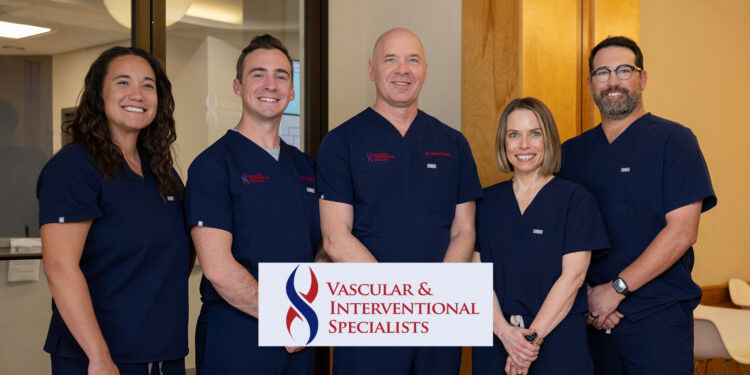
Part of the second-largest independent vascular surgical group in the nation, the Kansas City practice opened just over a year ago and has quickly established itself with three locations serving the metro area. With four board-certified vascular surgeons, and a fifth joining in July, the practice brings a level of specialized expertise that sets it apart from the vein clinics proliferating along local roadways.
“The majority of our new patients come from physician referrals,” explained Tashia Cramer, RN the practice’s Area Manager. “Area doctors trust these surgeons because this is all they do. They went to school specifically for vascular surgery, completed residency training in this specialty, and they stay on the cutting edge of new techniques.”
 When any surgery becomes a vascular procedure
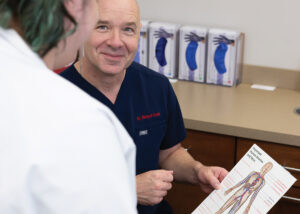
That specialized expertise becomes critical in ways most patients never consider. Dr. Richard Coats, one of the practice’s fellowship-trained vascular surgeons, often serves as an access surgeon for complex spine procedures, performing exposures that allow spine surgeons to access the vertebrae directly from the front. This involves making an abdominal incision, moving the abdominal contents aside, and carefully repositioning major blood vessels including the aorta, iliac veins and arteries, and vena cava.
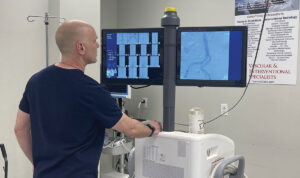 “A minority of vascular surgeons perform these exposures, which can be highly complicated depending on the vascular anatomy,” Dr. Coats explained. His presence in the operating room serves another vital purpose: “There’s a saying that any surgical procedure can become a vascular procedure if complications arise. We’re often called emergently to assist other surgeons from other specialties when arterial or venous injuries occur during routine orthopedic, gynecological, or general surgery procedures.”
The scope of vascular surgery extends far beyond what most people realize.
“As vascular surgeons, we treat essentially every vein or artery in the body except for the heart or within the brain itself,” said Dr. Coats. “We treat blockages in the arteries going to the brain, aneurysmal disease, which is an enlargement of an artery, arterial blockages in the legs which can lead to limb-threatening issues, and more minor procedures such as treatment of varicose veins.”
One case illustrates the complexity of what these specialists handle: Dr. Coats once treated a patient with a ruptured abdominal aortic aneurysm that had eroded into both the small intestine and the spine. The procedure required replacing the patient’s aorta with a cryopreserved aorta, repairing the intestine, and assisting the spine surgeon with removal of the third lumbar vertebrae and replacement with instrumentation.
“The patient did extremely well despite the seriousness of the operation and was discharged a few days later,” he noted.
This level of expertise requires extensive training. Twenty to thirty years ago, general surgeons with an interest in vascular surgery performed most vascular procedures. Now fellowship training is mandatory.
“Vascular surgery has become more complex with more procedures being performed, both minimally invasive and open surgical procedures,” Dr. Coats explained. “General surgeons no longer have the training to do vascular surgery.”
That’s the distinction patients should understand when seeking vascular care.
“Specialized vascular care is best treated by a vascular surgeon, as we treat all levels of vascular disease from minor spider veins to replacing someone’s aorta,” said Dr. Coats. “There are other specialties that dabble in treating vascular disease; however, vascular surgeons have the ability to perform treatment of all levels and severity of arterial and venous problems. We have the ability to do minimally invasive procedures, or if needed, more invasive major surgical procedures.”
 An alternative to knee replacement
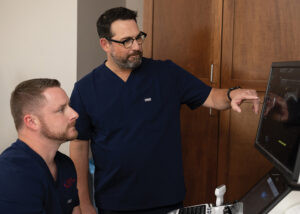
While complex surgical procedures represent one end of the spectrum, the practice also offers cutting-edge minimally invasive treatments that are changing patients’ lives in equally dramatic ways. Like all of the surgeons at Vascular & Interventional Specialists, Dr. Austin Wagner specializes in Genicular Artery Embolization (GAE), a newer procedure for chronic knee pain, most commonly from osteoarthritis.
“The idea is to block abnormal blood flow to the synovial tissue, which is a specialized connective tissue that lines the joint and is thought to be the source of inflammation that triggers the pain,” Dr. Wagner explained. “We use tiny particles injected via a small catheter to these abnormal vessels, potentially offering pain relief, reduced swelling, and faster recovery than surgery.”
The procedure should be considered for patients who have tried medications, injections, and physical therapy without much relief and want to avoid major knee replacement surgery—or for those who aren’t good surgical candidates for knee replacement.
Dr. Wagner has treated patients across the activity spectrum. “I’ve had the good fortune of taking care of many individuals seeking relief from their chronic knee pain. From patients who simply want to mobilize better around their house or get up and down their stairs with less pain, to very active individuals who were wanting to get back out to the golf course or tennis courts and continue doing the activities they enjoy.”
GAE isn’t the only minimally invasive option Dr. Wagner offers.
“My colleagues and I also perform a variety of minimally invasive procedures not only to treat chronic knee pain but also for peripheral vascular disease, as well as venous insufficiency with or without varicose veins, which is an often-underdiagnosed cause of leg pain or discomfort,” he emphasized.
The practice’s independent structure plays a crucial role in patient care.
“Being part of a specialized, independent group like this allows us to take care of patients in a more personalized way, often much more efficiently and cost-effectively than can be done in a hospital-based system,” said Dr. Wagner.
 Technology that transforms outcomes
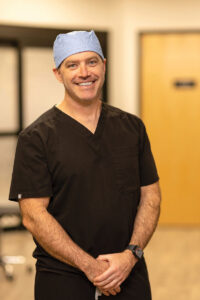
The integration of advanced technology has been central to the practice’s approach from the beginning. Dr. Chad Laurich explains that the continuous evolution of medical technology has fundamentally changed what vascular surgeons can accomplish for their patients.
“Having all that advancement, it really has brought us a quicker, faster, more efficient procedure for the patient,” Dr. Laurich said. “It’s less time they have to spend during the procedure. The more efficiently you can do the work, the better the outcomes become.”
The practice’s commitment to staying at the forefront of innovation means patients have access to tools and techniques that might not be available elsewhere.
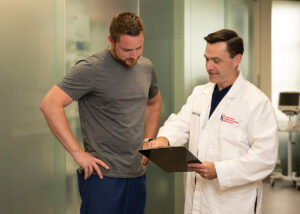 “We have pretty much every tool that’s available locally, but even on the national stage and something’s on the world stage that we have access to,” Dr. Laurich noted. “We’re able to have it here and really integrate it with our patient care, and it makes a massive difference for us.”
But technology serves another critical purpose beyond the procedures themselves, as it also enables better communication and collaboration with other physicians. The practice recognizes that comprehensive patient care requires teamwork.
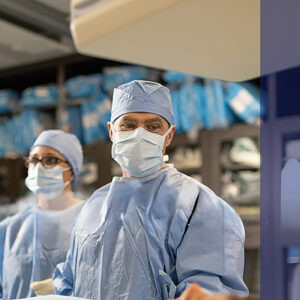 “We don’t treat patients in a vacuum. We treat patients as part of a care team, and that is usually quarterbacked by their primary care physician,” Dr. Laurich explained.
Advanced communication technology allows primary care physicians to remain involved in their patients’ care in unprecedented ways. They can even be present virtually during procedures, ensuring continuity of care and understanding of the treatment their patients receive.
“Being able to communicate and have that physician be a part of their care and understanding their care that they’re receiving from us is really critical,” said Dr. Laurich.
The technology infrastructure also positions the practice as a leader in medical education. The surgeons produce short training videos internally for real-time learning and provide higher-level education for physicians through procedural training. Physicians fly in to spend time personally with the team, and the practice live-streams cases and educational content to locations around the country.
For patients, all this technological sophistication translates into tangible benefits.
“What all this technology means for our patients is that they have a shorter procedure, a more efficient procedure, a less invasive procedure, and a more effective procedure,” Dr. Laurich said. “That means their experience is enhanced in multiple ways: less pain, quicker recovery, and it’s a better outcome. And that’s really what this is all about.”
What is an Office-Based Lab (OBL)?
An office-based lab (OBL) is the least restricted type of surgical center, designed for outpatient procedures that don’t require overnight hospital stays. At Vascular & Interventional Specialists, patients come in for their procedure and typically leave within an hour afterward. Because OBLs aren’t hospital-based, the out-of-pocket costs are significantly lower, even when insurance covers a portion of the procedure. This means patients receive the same high-quality specialized care in a more convenient, cost-effective setting.
University-level care, close to home
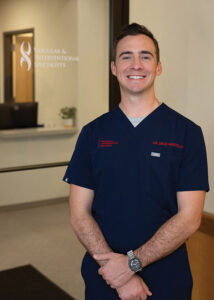 Dr. David Mantilla, a board-certified vascular surgeon with the practice specializing in the diagnosis and treatment of complex arterial and venous disease using open, endovascular, and hybrid techniques. His focus on minimally invasive procedures offers patients options they might not have known existed.
“With minimally evasive procedures, there’s usually a shorter recovery time, there’s less time in the hospital, people are back to their normal lives quicker, there’s less complications compared to surgery,” Dr. Mantilla explained. The difference these procedures make becomes apparent quickly in patients’ lives and sometimes changes those lives dramatically.
“A lot of times the problems that people have been dealing with have been growing for years. Sometimes it’s affecting their ability to work or just their ability to live independently,” Dr. Mantilla said. “When you can have a person who’s coming in and they’re not sure if they’re going to be able to keep their job or stay in their home, but yet with the same day treatment with low risk, you’re able to keep them in their home, keep them independent, keep them functioning in their community. This is what really gets me up in the morning.”
Having this level of specialized care available locally represents a significant advancement for the Kansas City community.
When to see a vascular surgeon – Consider consulting a vascular surgeon if you experience:
-Leg pain or cramping that worsens with walking
-Visible varicose veins accompanied by pain, swelling, or skin changes
-Chronic knee pain that hasn’t responded to conservative treatment
-Non-healing wounds on legs or feet
-Numbness or weakness in limbs
-Swelling in legs or ankles
-Sudden, severe pain in abdomen or back
-Changes in skin color or temperature in extremities
Many vascular conditions are progressive, making early intervention important. Vascular & Interventional Specialists accepts direct patients for many conditions, so a referral isn’t always necessary.
“Over here at VIS, we’re offering the absolute latest in interventional radiology and endovascular, and the best part about it is we don’t have to leave the Kansas City area. It’s right here at home,” Dr. Mantilla noted. “Patients are getting treated with university-level expert care right here in KC.”
For Dr. Mantilla and his colleagues, the driving force behind their work is straightforward: providing relief to those who are suffering.
“As physicians, we want every patient who is in pain to have an option not to be in pain,” he said.
That commitment fuels ongoing innovation and improvement.
“When you’re passionate about something and it’s your livelihood and you see the results and you see patients happy, smiling, celebrating their outcomes, it just drives you more and more to be on top of offering what’s the next thing I can offer them, what can I do for them tomorrow,” Dr. Mantilla said.
Accessible, affordable, independent care
With three Kansas City locations – in Olathe, Lee’s Summit, and North Kansas City – and two office-based labs (OBL) where outpatient procedures are performed, Vascular & Interventional Specialists have made specialized vascular care more accessible and affordable than traditional hospital-based treatment. The practice accepts many patients directly without requiring a referral, removing barriers to care for those who recognize they need vascular expertise.
The practice continues to expand, with a new location opening in Fargo in July, joining the rest of the VIS family in Dakota Dunes, SD, Omaha, NE, Chicago, IL, and Black Hills, SD. But expansion doesn’t mean losing the personalized approach that defines independent practice. It means more patients will have access to world-class vascular care delivered efficiently, effectively, and with genuine expertise.
For Kansas City residents dealing with vascular issues, whether varicose veins, chronic knee pain, arterial blockages, or complex surgical needs, Vascular & Interventional Specialists represents a new standard of specialized, accessible care.

Vascular & Interventional Specialists and Physicians:
Dr. Richard Coats, Dr. Austin Wagner, Dr. Chad Laurich, MD, FACS, Dr. David Mantilla
Olathe Office & OBL (Clinic and procedures) 824 W Frontier Ln, Olathe, KS 66061
Lee’s Summit Office & OBL (Clinic Suite A and procedures Suite D) 3600 NE Ralph Powell Rd, Lee’s Summit, MO 64064
North Kansas City Office (Clinic)2750 Clay Edwards Drive, Suite 600 North Kansas City, MO 64116
Call 816-675-0920 or visit https://vascularcarekc.com/