Beyond the Biopsy
Article by Ann E. Butenas
When your skin looks healed, but your doctor says otherwise, the reason may be hiding just beneath the surface.
 The wound has closed. The spot looks clear. Life has moved on. So, when a dermatologist recommends additional treatment after a biopsy, it can feel confusing, perhaps even unnecessary. But skin cancer has a way of being deceptive, and what you can’t see may matter more than what you can.
“Just because you don’t see much on the surface after a biopsy is done, doesn’t mean there aren’t still cancerous cells beneath the surface that need treatment,” explained Dr. Jeanette Pitts, a board-certified dermatologist and Micrographic Dermatologic Surgery specialist at KMC Dermatology. Dr. Pitts brings more than 20 years of dermatologic surgery experience to her Kansas City hometown, having led Mohs surgery programs at institutions including Mayo Clinic Arizona and the University of Arizona Cancer Center. She knows firsthand what’s at stake when patients hesitate.
That hesitation is understandable. It’s also potentially costly in terms of both health outcomes and the complexity of treatment down the road. The good news? There is a surgical technique specifically designed to address exactly this challenge: Mohs surgery, which is precise, highly effective, and uniquely suited to finding what the naked eye cannot, and which has become the gold standard for treating certain skin cancers.
What Is Mohs Surgery?
Developed by Dr. Frederic Mohs in the 1930s, Mohs surgery has evolved into one of the most precise tools in dermatologic medicine.
“Mohs surgery allows us to minimize the amount of tissue removed while obtaining microscopic confirmation that the tumor has been completely removed,” Dr. Pitts said.
Unlike standard excision, which removes a wider margin of tissue and sends it to an outside lab for review, Mohs is conducted in stages, with the surgeon analyzing tissue on-site and in real time. The result is a level of precision that traditional removal simply cannot match.
Who Is a Candidate?
Mohs surgery is most commonly used to treat the two most prevalent forms of skin cancer: basal cell carcinoma and squamous cell carcinoma. In the right circumstances, it may also be appropriate for less common skin cancers. Location on the body plays a significant role in determining whether Mohs is the right approach.
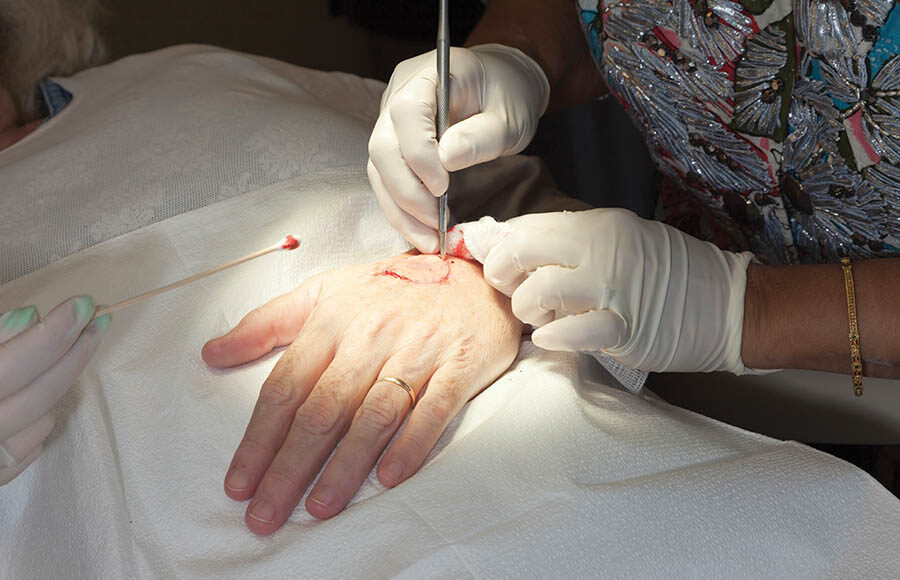
“Areas of the body where tissue sparing is critical, where removal of even a small amount of tissue can significantly impact the aesthetic appearance or function, are ideal for Mohs,” Dr. Pitts said. The head, neck, hands, feet and front of the lower leg are among those areas where this level of precision matters most.
How the Procedure Works
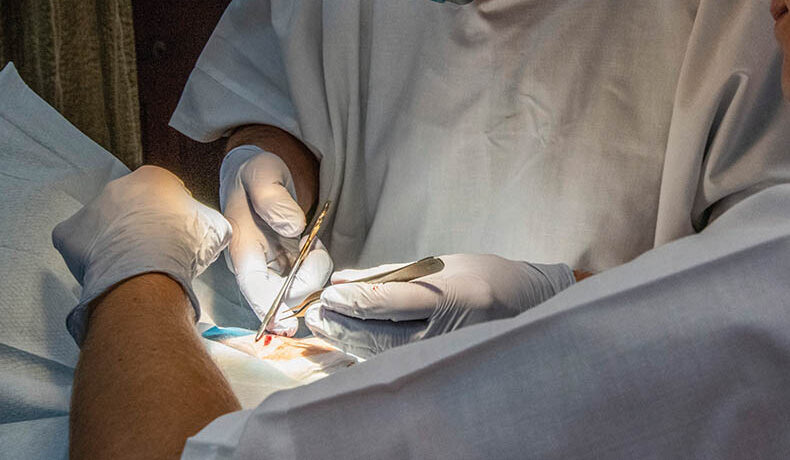
One of the most reassuring aspects of Mohs surgery is that it does not require a hospital operating room. The procedure is performed under local anesthesia in an appropriately equipped office-based procedure room, making it far less daunting than many patients anticipate.
The process unfolds in stages. First, a pre-operative assessment confirms the treatment site and ensures the patient understands the plan, including how the resulting wound may be repaired. The surgeon then removes tissue around the tumor, places a bandage over the site, and has the patient relax in a comfortable waiting area while the tissue is processed in an on-site Mohs lab.
Slides are prepared and reviewed by the Mohs surgeon, using an inked specimen and a detailed map to document findings and guide any further removal. If cancerous cells remain at the surgical margin, the process repeats. Once the tumor has been fully cleared, the patient returns to discuss wound closure options, which most often involves suturing the site, though some wounds are allowed to heal naturally or with the aid of skin substitutes.
A particularly valuable feature of this approach is the dual role the Mohs surgeon plays.
“When the surgeon is also interpreting the pathology, the correlation between what is seen under the microscope and the actual patient wound is more precise,” Dr. Pitts said.
The “It Looks Fine” Misconception
Perhaps the most critical message for patients to understand is this: a healed surface does not mean a cleared cancer.
“Microscopic tumor cells aren’t always visible, but with time can cause damage,” Dr. Pitts said. “A scar on the surface can mask tumor beneath it.”
Delaying or deferring treatment carries real consequences.
“If your doctor has recommended further treatment for definitive removal based on the biopsy results, it’s best not to defer that,” Dr. Pitts advised. “If you wait until there is something you can see again on the surface, it may require a more extensive procedure to completely remove it than if you had proceeded with treatment when it was first diagnosed.”
As with most medical conditions, early diagnosis and treatment are paramount.
“Procrastination is not a friend of cancer,” she said. “They rarely have a peaceful co-existence.”
Success Rates and Recovery
For patients who do move forward with Mohs surgery, the outcomes are encouraging. The procedure offers up to a 99% success rate for new cancers and approximately 94% for recurrent ones, with healthy tissue preserved to the greatest extent possible. Recovery is generally manageable. For most facial wounds that are closed with sutures, removal of those sutures occurs within one week. Areas such as the extremities, trunk, and scalp may require sutures to remain a bit longer. Some inflammation, bruising, and swelling may persist after suture removal, but these effects are typically limited.
Act Now
When it comes to skin cancer, the most important step is the next one. Whether you have already received a biopsy result or simply noticed a spot worth watching, don’t let the appearance of healing become a reason to wait. Early action is almost always the least invasive action, and the right physician can help you understand exactly what your next step should be, because what’s happening beneath the surface of your skin is too important to leave to chance.
For more information on Jeanette Pitts, MD located at theKMC Mission location, or any of the other locations KMC offers including Kansas City, Leawood, Independence, Olathe, Leavenworth, Lawrence, Emporia, Manhattan, Topeka and Hunters Ridge please visit kmcpa.com.