Ascend Hospice & Palliative Care – Volunteer Program Spotlight
Article by Corinn Ayers
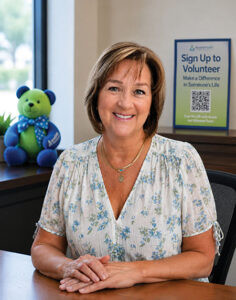 Most people don’t realize that every hospice in the United States is required by Medicare to maintain a volunteer program. Hospice care, in fact, got its start through volunteers long before it became a formal medical benefit. At Ascend Hospice & Palliative Care, Volunteer Supervisor Gretchen Goodwin is building a program that continues to make a meaningful difference for patients and families.
Goodwin came to the role about two and a half years ago with a background in education and a personal experience of the need for comfort with end-of-life care. She inherited a program that had largely gone quiet during COVID and has since rebuilt it from scratch. When she started, there were no active volunteers in the program. She began by reaching out to people she knew personally, asking them to come on board.
“I started with my inner circle,” she says. “Those people are still with us, and that says a lot about who they are.”
From that starting point, Goodwin has built a program that now includes high school students, college volunteers, working adults, and retirees “Any age, any person, any background can do this,” she says. “All we care about is your heart.” The range of what these volunteers contribute is broader than most people might expect.
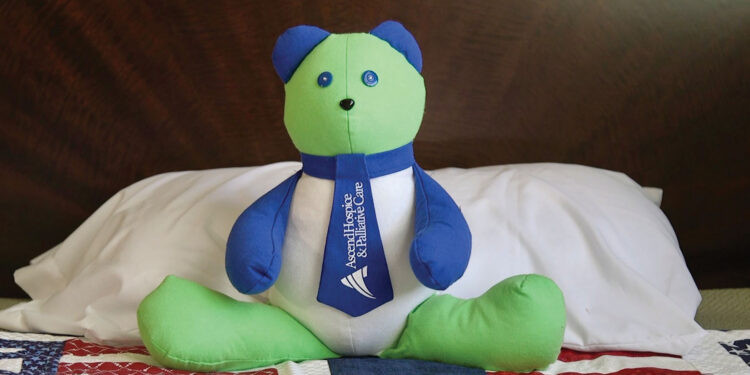
Ascend volunteers fill a wide variety of roles depending on their interests, availability, and comfort level. Some assist with administrative work behind the scenes. Others write and assemble bereavement cards that are sent to families in the weeks following a patient’s passing. One volunteer regularly cuts patients’ hair. Another makes memory bears sewn from patients’ own clothing.
Ascend’s music therapists are able to capture a heartbeat recording that gets tucked inside each bear, which is then given to the family. That one volunteer has made more than 200 bears in the past year and a half.
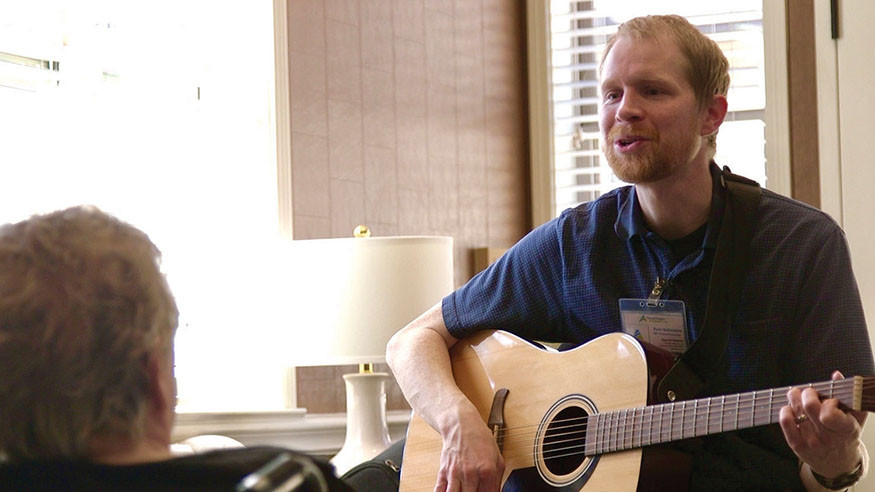
The most common volunteer role, and perhaps the most straightforward to describe, is companion visiting. Companion volunteers commit to spending one hour per week with a
patient, providing conversation, a listening ear, and consistent company. No medical background is required. No special skills are expected. What matters is the ability to be present and to show up reliably.
“Nobody should be alone at the end of their life,” Goodwin says. “Even when a patient has very involved family members, those people have jobs, they have obligations, they may be traveling. There is always room for more care, and our volunteers help with that.”
Goodwin is candid about the nature of the ask. Recruiting hospice volunteers requires acknowledging that people are being asked to spend time in spaces that many find uncomfortable. She doesn’t minimize that. What she does emphasize is that patients are still very much present, still interested in conversation, still interested in connection.

Becoming an Ascend volunteer is not a casual sign-up. The process includes a background check, blood work, online training modules, and an in-person meeting with Goodwin. Those requirements are set by Medicare and are in place to protect patients.
Once someone joins, Goodwin stays in regular contact with her volunteers. She recognizes that the work can be emotionally heavy and makes a point of acknowledging volunteers as people, not just program participants. Birthdays and personal milestones are recognized. The broader care team at Ascend (which includes nurses, social workers, home health aides, chaplains, a music therapist, and massage therapists) operates as a close-knit group, and volunteers are considered part of that team.
“We all work together so well,” Goodwin says. “We really are people-focused and tight knit.”
For volunteers interested in a more involved role, Ascend offers free end-of-life doula certification training.

The program includes two days of in-person training with Ascend’s corporate volunteer supervisor, 40 hours of independent online coursework, and 100 hours of direct patient contact before certification is complete. It is a significant commitment, but one that opens up a broader scope of patient support.
Certified doulas can take on legacy projects with patients, sit vigil near the end of life, and provide a level of continuity and closeness that goes beyond a standard companion volunteer role. The certification is provided entirely at no cost to the volunteer.
Many volunteers find that the experience offers something they did not anticipate going in. Spending regular one-on-one time with the same person over weeks and months tends to produce real connection. Goodwin hears this reflected back from volunteers regularly, that they came in hoping to be helpful and found that the relationship gave them something in return as well.

In addition to her work managing Ascend’s volunteer program, Goodwin is developing a new community group called Asc-end of Life. The group is modeled on the “death café” concept, an informal gathering format in which community members come together to have open conversations about death and end of life. There is no agenda beyond discussion, and the group will be open to anyone who wants to participate.
The goal is to make end-of-life conversations more accessible and less avoided. Goodwin sees it as a natural extension of the work Ascend already does, meeting people where they are and helping normalize something that is a universal experience.
For those interested in volunteering with Ascend Hospice & Palliative Care or learning more about the end-of-life doula certification program, information and the volunteer application please visit ascendhealth.com/programs/doula-program/ or ascendhealth.com/volunteer/