Credentials Drive Outcomes
Article by Ann Butenas
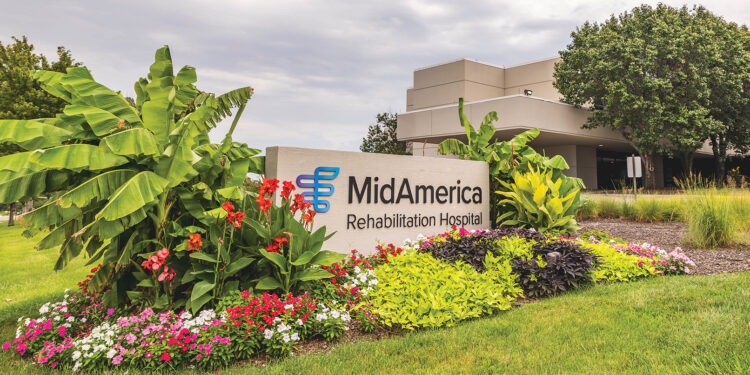
At MidAmerica Rehabilitation Hospital, the depth of clinical education behind every specialist is the foundation of every recovery.
When it comes to rehabilitation, the difference between good care and exceptional care often comes down to what happens before a patient ever walks through the door. At MidAmerica Rehabilitation Hospital, the clinicians who guide patients through some of life’s most challenging recoveries, from stroke and brain injury to spinal cord injury, limb loss, and Parkinson’s disease, bring not only foundational degrees but also layers of specialized certifications, advanced training, and hard-earned expertise that set them apart in their fields. That commitment to continuous learning is intentional, and it shows in the outcomes their patients achieve every single day.
 A Foundation Built on Purpose
For Lisa Fortner, MidAmerica Rehabilitation Hospital’s Brain Injury Team Champion, the path to rehabilitation was anything but a straight line, and that is precisely what makes her perspective so powerful. After earning her Bachelor of Science in Social Work from the University of Kansas, Fortner worked in Wyandotte County using a grant to help individuals with brain injuries transition out of the hospital and back into the community. That experience lit a spark within her.
“Working with individuals with brain injury in that capacity made me realize that occupational therapy would be the perfect fit,” she said. She went back to school, launched a second career in OT, and has now been with MidAmerica Rehabilitation Hospital for 28 years.
Joni Cook, the hospital’s Stroke Care Team Lead, followed an equally intentional path. She earned her Bachelor of Science in Education from the University of Kansas before completing her Doctorate of Physical Therapy at the University of Kansas Medical Center. Her focus narrowed quickly to stroke rehabilitation, where she has built her career and her credentials. She holds certification as a Certified Stroke Rehab Specialist, a designation that requires ongoing advanced continuing education to maintain.
“The research is always changing, and new methods are being developed,” Cook said. “Continuing education is an important part of being a therapist.”
Specialized Training, Real-World Impact
Credentials on paper only matter if they translate to better care at the bedside, and both specialists are clear about how their advanced training shapes their daily practice.
Fortner holds her Brain Injury Specialist certification from the Brain Injury Association of America and has maintained it for more than 20 years. She is also a Certified Crisis Intervention Trainer, a designation that proves especially valuable when working with patients whose brain injuries have resulted in behavioral challenges.
“Both of these specialized trainings have provided me with a more detailed ability to work with those with behavioral issues and to mentor coworkers in managing behaviors as well,” she said.
Cook points to the breadth of her stroke team’s collective credentials as the real differentiator. Team members hold Ekso certification, NDT certification and Neuro-Ifrah certification. Speech therapists are trained in Vital-Stim, AmpCare and FEES. Nurses are Certified Rehab Registered Nurses, with several currently pursuing the Stroke Certified Registered Nurse credential as well.
“MidAmerica is known for its innovative technology that therapists have access to use with their patients daily,” – Joni Cook
Staying Ahead of a Changing Landscape
Both specialists acknowledge that rehabilitation medicine is evolving rapidly, and that keeping pace requires more than a degree on the wall.
Cook describes the most significant shift in stroke care as a move toward early, personalized, high-intensity, neuroplasticity-driven rehabilitation supported by technology.
“MidAmerica is known for its innovative technology that therapists have access to use with their patients daily,” she said.
Fortner echoes that sentiment from the brain injury side, noting that while shorter insurance-driven stays have compressed the timeline for recovery, MidAmerica Rehabilitation Hospital’s team responds by maximizing every hour from admission forward, addressing physical, cognitive and behavioral needs simultaneously, and leveraging high-tech tools in muscle re-education, driving rehabilitation and communication augmentation.
“These options, along with specialized trained therapists, allow us to make those changes using high-tech innovations,” she said.
“One hundred percent listening to the patient and utilizing every hour of the patient’s stay in addressing rehab needs is important” – Lisa Fortner
The Credential-Outcome Connection
When asked to draw a direct line between their team’s education and the results patients achieve, both Cook and Fortner point to something that goes beyond certification alone: a culture of listening, collaboration, and accountability.
“One hundred percent listening to the patient and utilizing every hour of the patient’s stay in addressing rehab needs is important,” Fortner said. Her brain injury team includes multiple Certified Rehab Registered Nurses at the supervisory level, core team members who are Certified Brain Injury Specialists and therapy staff who are CPI certified, with the majority also holding NDT or Neuro-Ifrah certification.
Families are brought in early, she added, so that barriers to discharge are identified and addressed from day one. In other words, there are no surprises.
Commitment to Credentialed, Specialized Care Extending Across All Five Joint Commission-certified Programs
A 35-Year Commitment to Excellence
MidAmerica Rehabilitation Hospital has held Joint Commission certification in specialty programs since its founding 35 years ago, a distinction that reflects an institutional commitment to evidence-based care that goes well beyond individual credentials.
“We value our educational process and continue to encourage growth in our employees to provide evidence-based expertise that ensures patients meet their goals and return home to the community,” Fortner said.
For Cook, the message to patients and families considering their options is equally direct: the level of clinical education in a rehabilitation facility matters enormously, and at MidAmerica Rehabilitation Hospital, that standard is not left to chance.
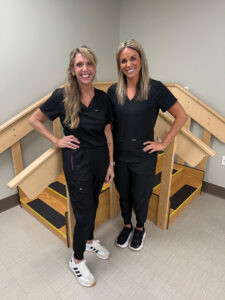
MidAmerica Rehabilitation Hospital’s commitment to credentialed, specialized care extends across all five of its Joint Commission-certified programs. Betsy Wilson, Spinal Cord Injury champion, Brandy Johnson, Amputee champion, Morgan Davis, Amputee co-champion and Stacie Blackwell, Parkinson’s champion with Josh Logan, Parkinson’s co-champion, round out a team of clinicians whose collective training, certifications, and dedication to ongoing education reflect the same standard of excellence. Together, these specialists represent what MidAmerica Rehabilitation Hospital has always stood for: a team of highly trained, deeply experienced clinicians united by a single goal: delivering the best possible outcomes for every patient, every time.

For more information about MidAmerica Rehabilitation Hospital visit encompasshealth.com or call 913.491.2400