Bones, Bodies, Balance
Story by Ann Butenas
The orthopedics team at Providence Medical Center takes a patient-first approach to getting people moving again.
 When something hurts, a knee that won’t cooperate, a shoulder that aches through the night, a hip that has quietly stolen the life you used to live, you want a team that listens before it operates. At Providence Medical Center, that philosophy is more than a talking point. It is the foundation on which the entire orthopedics program was built.
Rooted in a long-standing devotion to musculoskeletal care, the orthopedics department at Providence has grown steadily alongside the community it serves. What began as a basic general orthopedic practice has expanded into a comprehensive, multi-provider department supplied with advanced diagnostic tools, minimally invasive techniques, and a patient-first philosophy that puts education and collaboration at the center of every treatment decision.
“We have an extensive background with orthopedics,” said Lindsey Grant, PA. “We are excited to have built a continuing program to further enhance care for our community.”
That excitement is not just institutional pride, either. It shows up in the caliber of providers they have assembled and the depth of care they are prepared to deliver.
The Providence orthopedics department is anchored by a growing team of physicians, each bringing general orthopedic training alongside highly specialized fellowship expertise.

Dr. Katie Smeltzer completed fellowship training in total hip and knee arthroplasties and revisions, and also treats fractures around those joints. For patients facing joint replacement or working through the complicated terrain of a revision procedure, her focused training is a meaningful asset at every stage of care.

Dr. John Swab, DO, joined the practice as a specialist in shoulder repair and replacement, and his arrival has been nothing but revolutionary.
“Welcoming Dr. Swab has been a game-changer for our program,” said Grant. His patients present with everything from rotator cuff injuries to full shoulder replacements, and the outcomes have been consistently strong. In a specialty where results are the ultimate measure, that past record speaks clearly.
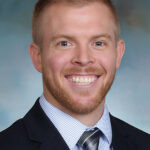 Dr. Garrett Gilbert brings a particularly specific perspective to the practice. His fellowship training extended into Europe, where he studied how international sports medicine is advancing the treatment of athletic injuries. That global exposure informs a wider, more progressive approach for active patients, whether competitive athletes, weekend warriors, or working adults who simply need to get back to doing what they love.
One of the most defining characteristics of the team’s approach is a deliberate, unhurried commitment to non-surgical care. In a medical setting where patients may sometimes feel pressure to move quickly toward intervention, this group of practitioners takes a different stance.
“Our providers make sure each patient has knowledge and understanding of their condition,” Grant explained, “maximizing conservative treatments rather than jumping into surgery.”
That commitment shapes every appointment from the very first visit. The team invests significant time in patient education, walking through every realistic option before a surgical conversation even begins. Those options include injection therapies such as PRP, or platelet-rich plasma, which draws on the body’s own healing mechanisms to address damaged tissue. Hyaluronic acid injections offer meaningful relief for arthritic joints, and ultrasound-guided methods bring precision to each procedure, improving accuracy and individual comfort alike.
Beyond injections, the department offers bracing, splinting, casting, and aspiration services, a well-rounded conservative care toolkit built to treat a wide range of conditions without a trip to the operating room. When surgery does emerge as the right way forward, it is still a decision reached together.
“Orthopedics is an elective area,” Grant noted. “We make sure there is collaborative decision making in every patient’s treatment plan.” Surgery becomes the conversation when a patient is no longer able to manage their activities of daily living, and even then, no one moves forward until the patient feels genuinely comfortable with that choice.
“Our providers make sure this is a decision that patients feel comfortable with before progressing to surgery,” she added.
For conditions that do require surgical intervention, the Providence orthopedics team brings both proven and emerging techniques to every case.
Carpal tunnel release and trigger finger procedures are among the surgical services offered, including a minimally invasive carpal tunnel approach performed through a scope. That technique reduces recovery time and limits disruption to surrounding tissue, a real benefit for patients who need to return to work or daily activity as soon as possible. The department also has access to microscopic tools for diagnostic use, adding precision to pre-surgical evaluation.
For joint replacements, the team works at the forefront of what modern orthopedics makes possible. Some revision procedures are now computer-graphed from a patient’s own X-rays and produced through 3D printing, a level of customization that simply was not available a generation ago. A mobile C-arm in the operating room provides real-time imaging support, and custom-moldable splints ensure post-surgical immobilization is fitted to the individual rather than approximated.
The operating room itself reflects the department’s investment in growth. Skilled OR staff and updated equipment support an expanding range of procedures, including the shoulder replacement services that Dr. Swab brought to the program.
“Orthopedics is ever-changing and advancing with the aging population,” Grant said. “Our department is really harvesting that growth.”
As the population ages and demand for joint care rises, Providence is not simply keeping pace. It is investing in the technology, the staffing and the training that produce better outcomes for the patients who need them most.
Ask the Providence orthopedics team what they see most often in their patient population, and the answer is telling. Advanced hip and knee arthritis tops the list, frequently in cases where the condition has gone untreated for a very long time. Patients arrive having quietly managed their pain for years, often longer than they should have, before finally seeking care.
It is a pattern the team recognizes, and one they are well positioned to address. As the practice has grown, so has its ability to treat those advanced cases with the sophistication they require. New providers and expanded services mean patients no longer have to look far for the level of care their conditions warrant.
At the same time, the department continues to serve patients with more straightforward needs. Carpal tunnel release, trigger finger procedures and basic fracture care remain a steady and important part of the practice. Serving all age ranges and handling cases from simple to highly complex, the team has built a practice that genuinely meets the community where it is.
“Our community base is extremely loyal,” Grant noted, and that loyalty reflects something real. It is earned through consistency, through outcomes and through the kind of care that keeps patients coming back and sending their families.
For anyone who has never seen an orthopedic specialist, or who has had less-than-satisfying experiences elsewhere, the Providence experience is designed to feel thorough, transparent and unhurried from start to finish.
One important note before that first visit: no referral is required to be seen by the Providence orthopedics team. Patients can contact the team directly, and the team places strong emphasis on prompt access. Same-day appointments are a priority, particularly for patients coming from the emergency department who need splinting, casting or acute fracture care. For most patients, the goal is to have them on the schedule within one to two days.
Once a patient arrives, the experience reflects the same care that runs through every aspect of the practice. Front-office staff guide new patients through registration, vitals, medication review and a complete medical history. By the time the provider steps in, they have already reviewed that history along with any available imaging. That preparation keeps the appointment focused on the patient rather than on catching up.
The physician then discusses symptoms in depth, conducts a physical examination, and walks using imaging findings in plain, comparative terms, showing the patient what normal looks like alongside what their own images indicate. Treatment options follow, with an honest review of the benefits, risks and realistic recovery expectations tied to each path.
It is the kind of appointment many patients wish they had sought sooner.
Recovery from an orthopedic condition, whether managed conservatively or through surgery, rarely ends at the provider’s door. At Providence, physical therapy is not an afterthought. It is incorporated into the care model from the beginning.
“We can’t say enough great things about our physical therapy team,” Grant said. “Whether it’s an in-patient, post-op or out-patient issue, they are in communication with us continually. Together, we can catch things that are concerning.”
That ongoing communication between the orthopedics team and physical therapists creates a level of continuity that benefits patients at every stage of their recovery. Therapy outcomes are actively tracked as a key measure of overall program success, and individualized plans and assessments are in place for patients who need in-home care, helping them increase mobility and range of motion on a schedule that works for their lives.
The result is a recovery process that does not leave patients to figure things out on their own between appointments. It is coordinated, attentive, and built around getting each person back to full function as safely and efficiently as possible.
Orthopedic conditions rarely exist in isolation, and the Providence team understands that treating the whole patient sometimes means drawing on expertise from across the medical center.
The orthopedics department works closely with hospitalists and a range of sub-specialties, including wound care and pain management, both of which play an important supporting role in complex cases and post-surgical recovery. That team-oriented approach is something the department takes genuine pride in.
“We appreciate the team-oriented approach of our staff and providers,” Grant said. The collaboration is not transactional. It reflects a common commitment to follow-through and continuity, making sure that patients receive attentive care not just during their orthopedic appointments but throughout the full arc of their treatment.
Websites can tell you a great deal about a medical practice: the providers, the services, the locations. What they cannot fully convey is the atmosphere inside the clinic itself.
“In office, you can feel the compassion from our providers,” Grant said. “We take pride in following the best practices that result in great patient outcomes.”
That compassion goes beyond the physicians to the entire support staff, a team dedicated to both the patients and the providers they work alongside. The department’s emphasis on continuity of care means patients are not passed from provider to provider or left to restart their story with each visit. They can count on their care team for the long term.
The practice is also conveniently located and continues to grow, with expanded services, additional providers and genuine enthusiasm for what the future of orthopedic care looks like in this community.
For patients navigating joint pain, sports injuries, fractures or the gradual progression of degenerative conditions, the message from Providence is a straightforward one: no referral needed, no long wait and no shortage of people who will take your pain seriously from the moment you walk through the door.