Kids Get Arthritis, Too

Article by Arthritis Foundation
Arthritis doesn’t care about your race, gender, zip code or even your age. The truth is arthritis doesn’t discriminate; it can affect anyone. Nearly 60 million people in U.S. have doctor-diagnosed arthritis — including about 300,000 children, many of whom call the bi-state area home. That’s right, kids get arthritis, too. It’s called juvenile arthritis, or JA, and it can affect kids of all ages — from infants to teenagers.

What Is Juvenile Arthritis?
Juvenile arthritis is an umbrella term for pediatric rheumatic diseases — including juvenile idiopathic arthritis and other musculoskeletal conditions — that can affect children younger than 16.
Juvenile idiopathic arthritis, or JIA, is the most common type of arthritis in children, according to the Arthritis Foundation, a non-profit organization that’s made it its mission for over seven decades to fight arthritis through scientific research, patient-centered programs, advocacy and community connections thanks to donor and volunteer support.
JIA is an autoimmune disease that can affect joints, bones and soft tissue. It causes inflammation in the body that results in swelling, stiffness, limited motion and pain in any joint, but most often in the hands, knees, ankles, elbows and wrists. JIA also can seriously impact major organs like the heart, skin, lungs, digestive tract, and eyes. If not treated effectively, it can cause permanent damage to joints and organs and may even lead to blindness. Arthritis is also the nation’s #1 cause of disability.
There are approximately 300,000 kids with arthritis in the U.S. but only about 420 pediatric rheumatologists. That’s about 700 kids for each doctor!
In autoimmune diseases like JIA, the immune system, which fights harmful viruses and bacteria, mistakenly attacks healthy cells and tissue, too. What causes JIA is unknown, but experts believe it’s a combination of environmental and genetic factors. JIA is not contagious.
Symptoms, Diagnosis & Treatment
Symptoms depend on the type of JIA and how bad it is. JIA has several subtypes: systemic, which can affect any part of the body; oligoarthritis, which affects up to four joints; polyarthritis, which affects five or more joints; enthesitis-related, which affects the places where muscles and tendons attach to bone; psoriatic, which involves psoriasis (scaly skin patches); and undifferentiated, which doesn’t fit the other subtypes, but involves joint inflammation.
Common JIA symptoms include:
- Joint pain, stiffness and/or limited mobility, especially after waking or staying in one position too long
- Joints that are swollen or warm to the touch
- Fatigue
- Blurry vision or painful, red eyes due to eye inflammation called uveitis
- Rash
- High, spiking fever.
Diagnosing JIA is challenging. No single test exists. A pediatrician or primary care doctor can diagnose JIA, but they should refer patients to a pediatric rheumatologist (an arthritis specialist for kids) for confirmation and treatment
The Children’s Mercy Rheumatology team of nine pediatric rheumatologists cares for more than 750 children and adolescents with juvenile idiopathic arthritis (JIA). The team’s physicians and staff partner with the Arthritis Foundation to support local events and Camp Joint Adventures, an overnight camp for children with JIA. In addition, the team is active in national quality improvement and research networks to advance care and improve outcomes for patients with JIA.
Treating JIA can be equally challenging, and there is no cure. Access to care is often limited due to a shortage of pediatric rheumatologists. Kansas has fewer than four specialists, compared with 20 in Missouri, meaning some families wait months for an appointment and travel hours for care. Insurance policies like step therapy can also delay treatment, requiring kids to try multiple medications before coverage is approved. The Arthritis Foundation is working with the arthritis community to advocate against step therapy and address the specialist shortage. Treatment focuses on slowing or stopping the disease by controlling inflammation, which prevents damage to joints and organs, reduces pain and improves mobility.
Doctors recommend early treatment with powerful medicines, including disease-modifying antirheumatic drugs (DMARDs) like methotrexate and/or biologics that lower inflammation and slow the disease. These are given as shots or infusions (IV).
Most children with JIA won’t need surgery, but joint replacement can help those with severe damage. Research also shows that physical therapy, occupational therapy, mind-body approaches, and self-care strategies like hot and cold therapies, healthy eating, good sleep and stress management, can significantly reduce pain and other symptoms.
Getting Support
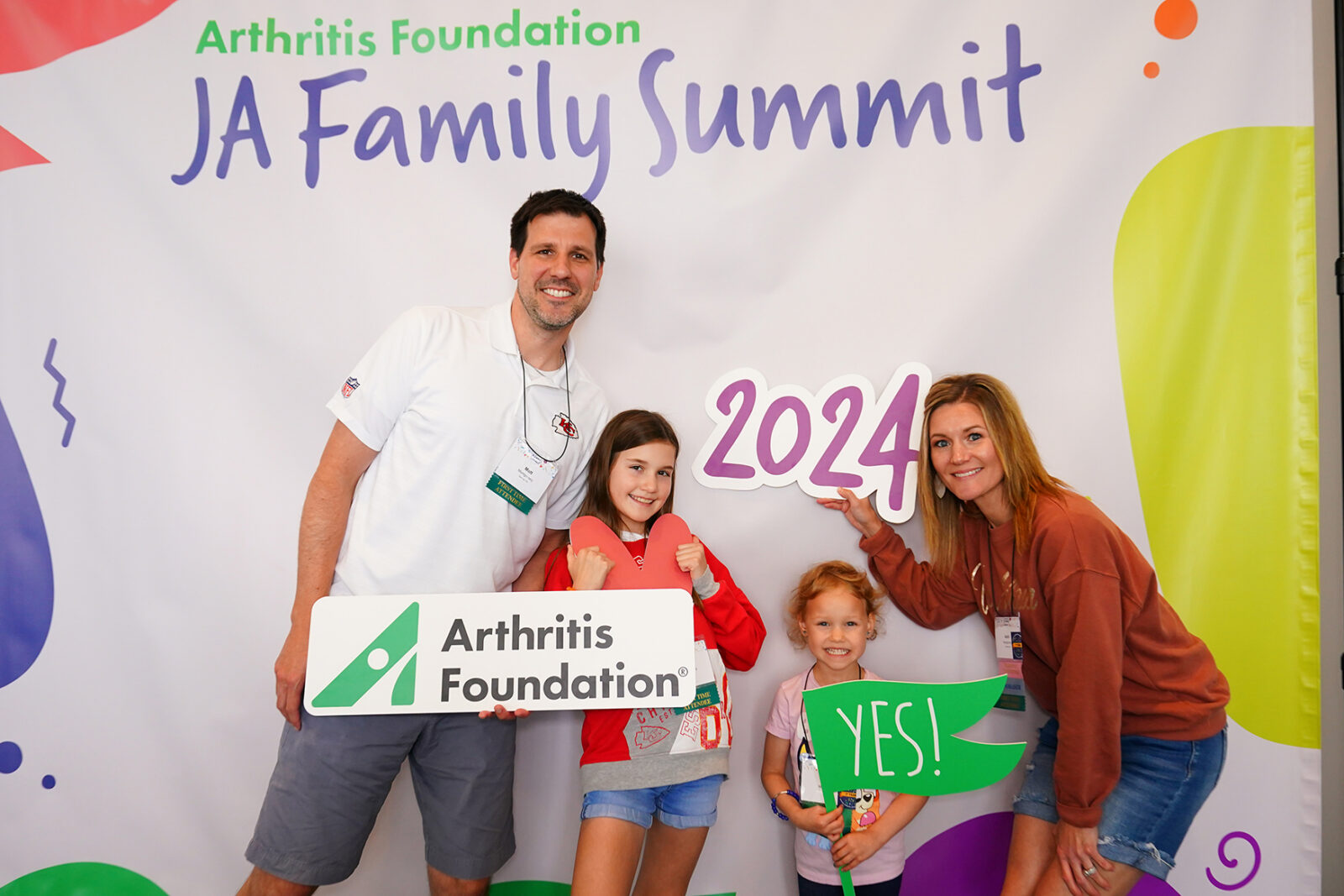
Studies show having a solid support system, not just for a child with JIA, but also their entire family, can improve patient outcomes. The Arthritis Foundation supports families with juvenile arthritis through tools like the JA Power Pack, a free, age-specific toolkit, and a wide variety of resources at arthritis.org/juvenile-arthritis. Families can also access support through the Arthritis Foundation Helpline (1-800-283-7800 or arthritis.org/helpline) and Connect Groups (connectgroups.arthritis.org), along with in-person experiences like JA Camps and JA Family Summit, a one-of-a-kind, annual event that provides programming, connection and fun for the whole family. Getting involved makes a difference. As one JA father puts it, “We wanted to turn a devastating situation for our family into an opportunity to raise awareness about juvenile arthritis and to raise funds for the Arthritis Foundation, an amazing organization that has been a superb support system.”
To learn more about juvenile arthritis, to get or provide support, or help raise awareness during JA Awareness Month, contact the Arthritis Foundation at arthritis.org.