When to worry about back pain
Story by Ann E. Butenas
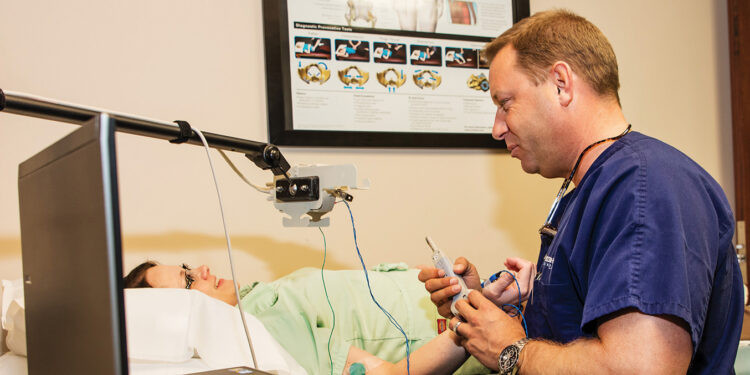
C. Lan Fotopoulos, MD explains how to distinguish ordinary back pain from something that needs real medical treatment.
 Almost everyone deals with some kind of back pain at some point in their lives. That’s practically a given. Most of the time, it comes and goes: a tweak from lifting something heavy, a stiff morning after too many hours at a desk, or a dull ache that fades within a week or two on its own. But for a significant number of people, back pain doesn’t fade. Instead, it lingers, worsens, and can begin to limit daily life. Knowing when that shift has happened can be the difference between a quick recovery and years of unnecessary suffering.
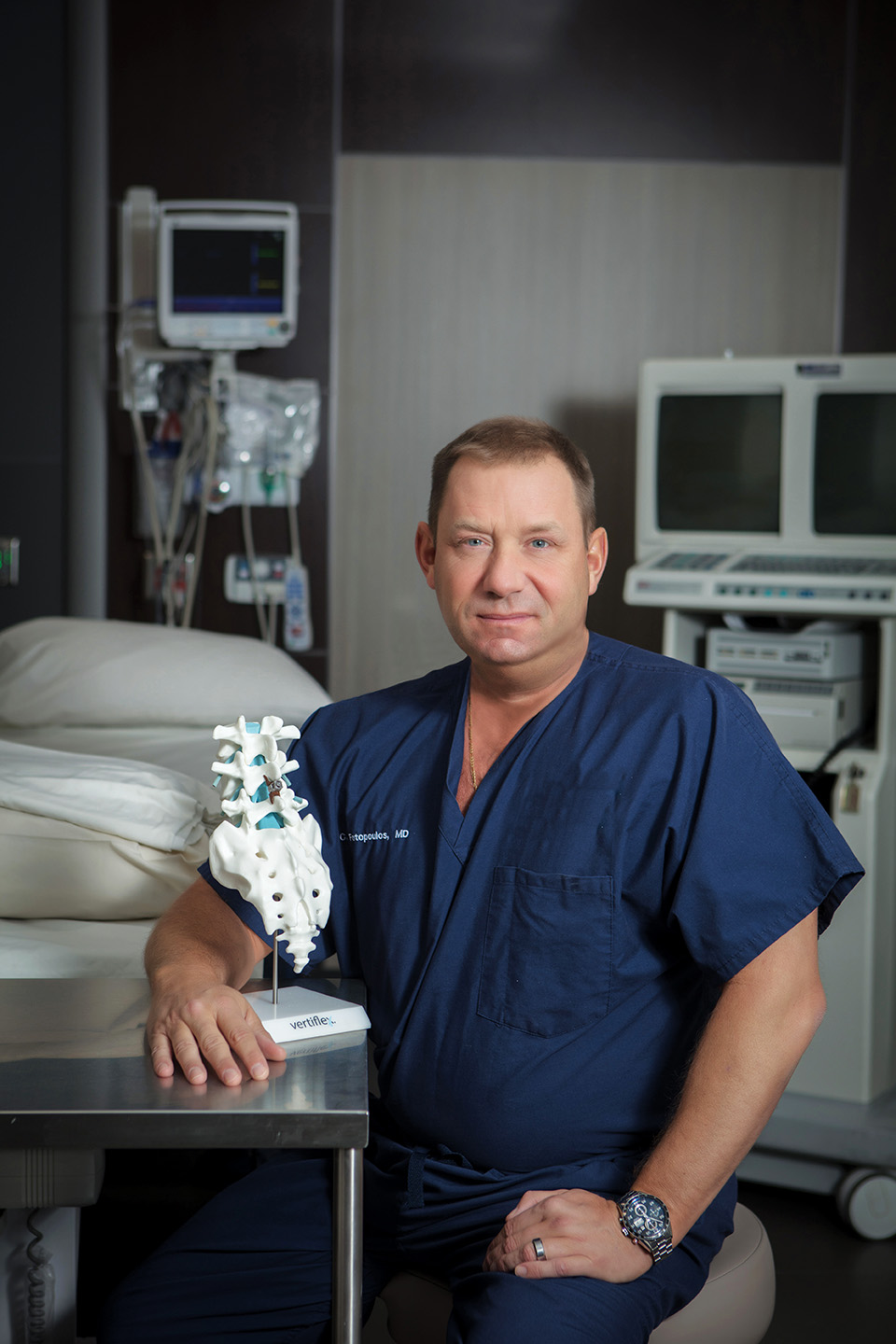
Dr. C. Lan Fotopoulos, an interventional physiatrist, spends much of his career helping patients figure that out.
“Most back pain will resolve with time, rest, and basic conservative care,” he noted. “The challenge is recognizing when it won’t and when waiting is actually making things worse.”
The Pain Most People Miss
 One of the most common culprits behind chronic lower back pain is also one of the least understood: the sacroiliac, or SI, joint. Located where the base of the spine meets the pelvis, the SI joint is responsible for a surprisingly large share of chronic back pain- by some estimates, around 30 percent of cases- yet there’s no X-ray, MRI, or blood test that can confirm it’s the source.
That makes SI joint dysfunction one of the more frequently overlooked causes of persistent back pain. Patients often go through rounds of imaging that come back normal, only to be told nothing is structurally wrong, even though the pain they feel is very real. Without a test to point to, diagnosis depends on a physical exam, targeted injections, and a process of elimination, exactly the kind of pattern recognition Dr. Fotopoulos has built his practice around.
“You have to have some level or index of suspicion, along with the history of the patient, to make a diagnosis,” he said.
His approach to SI joint dysfunction follows a systematic progression, starting with physical therapy to target pelvic alignment and core strength, anti-inflammatory medications, and specialized bracing for patients whose joints move excessively. When those measures are not enough, precisely targeted steroid injections come next. For the toughest cases, where conservative care and steroids only bring temporary relief, but diagnostic injections confirm the SI joint as the source, percutaneous SI joint fusion is often the answer.
“When there is no longer a period of relief from physical therapy, medications, and steroids, but diagnostic injections temporarily help, fusion may be the best option,” he said, noting that this minimally invasive approach has largely replaced radiofrequency ablation as the preferred permanent solution for SI joint pain.
Reading the Warning Signs
 So, how does an ordinary ache differ from something that needs attention? Dr. Fotopoulos points to a handful of signals patients can watch for, such as pain that does not improve within a few weeks, pain that radiates down one or both legs, numbness or tingling in the legs or feet, and pain that worsens with standing or walking rather than easing up are all reasons to seek a resolution rather than waiting it out.
Further, pain that disrupts sleep or that comes with weakness in the legs, is a stronger signal still. And any sudden loss of bladder or bowel control alongside back pain is a medical emergency, not something to monitor at home.
For the everyday, garden-variety back pain, Dr. Fotopoulos’ advice is refreshingly conservative: movement, not bed rest, tends to help more. Gentle activity, stretching, and basic strengthening usually outperform prolonged inactivity, and many cases resolve without ever needing to consult with a specialist.
A Ladder, not a Leap
 For pain that doesn’t resolve on its own. Dr. Fotopoulos is quick to point out that surgery is rarely the next step. His broader approach to back pain, as previously indicated, follows more of a ladder than a leap: physical therapy and conservative care first, then targeted treatments like epidural steroid injections for pain that’s identified as having a specific source, and only after those options have been exhausted does a conversation about more advanced interventions, like spinal cord stimulators or minimally invasive fusion procedures, begin.
That progression matters, he said, because so many patients assume surgery is their only option once basic treatment fails. There are usually several steps between an over-the-counter pain reliever and an operating room, and most patients never need to reach the far end of that ladder.
Listen Early, not Late
 If there’s one message Dr. Fotopoulos wants to emphasize is that back pain doesn’t have to be something you simply have to learn to live with. The instinct to wait it out is understandable, since most back pain genuinely does resolve on its own. However, when pain persists, spreads, or starts limiting your daily life, waiting can allow what started as a manageable issue to become a much more challenging one to treat.
“The earlier we understand what’s actually causing the pain, the more options a patient has,” he emphasized. “That’s true whether it’s something as common as a muscle strain or something more specific, like an SI joint that’s never been properly diagnosed.”
For the millions of people who deal with back pain at some point in their lives, that distinction, knowing when to rest and when to ask questions, may be the most valuable piece of medical advice there is.