BACK ON TRACK

Article by Ann E. Butenas
Jarron Tilghman, MD – explains why low back pain rarely has one cause, and why patients shouldn’t wait to get it checked out.
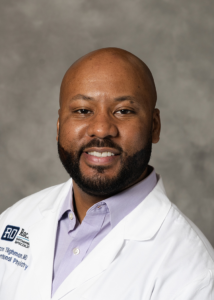 Low back pain sends more people to the doctor’s office than almost any other complaint, but it rarely comes from just one source. Jarron Tilghman, MD, a physiatrist and interventional pain specialist with Rockhill Orthopaedic Specialists, spends much of his practice untangling what’s really behind a patient’s pain and matching it to the right non-surgical treatment. He recently sat down with Healthy Kansas City Magazine to talk about what draws him to the field, the most common causes of back pain and what he wishes patients understood before their first appointment.
Q: What drew you to physical medicine and rehabilitation (PM&R)?
Dr. Tilghman: As long as I can remember, I have been passionate about both sports and the arts. I admire people who work hard to perform at their best, whether on the field or on the stage. That passion led me to physical medicine and rehabilitation, which helps people regain function and return to the activities they love. I enjoy helping patients overcome injuries and pain so they can get back to competing, performing and doing the things that are important to them.
Q: What makes PM&R different from other approaches to low back pain?
Dr. Tilghman: A physiatric exam is thorough but focused on the area causing pain or movement problems. Along with reviewing a patient’s medical history, the exam helps identify the cause of symptoms and guides the best treatment plan. Low back pain is one of the most common conditions we treat. Many patients either do not need surgery or prefer to try more conservative treatments first. As an interventional pain specialist, I offer a variety of nonsurgical, image-guided treatments designed to target pain, improve function and help patients get back to their daily activities.
Q: What are the most common causes of low back pain you see?
Dr. Tilghman: The most common causes of back pain I see are muscle strain, sciatica and arthritis in the lower back. Muscle strain happens when the muscles in the back become irritated or inflamed. Sometimes this pain is concentrated in small, sensitive areas called trigger points. Sciatica occurs when a nerve in the lower back becomes irritated or compressed, causing pain, numbness, tingling or weakness that can travel down one or both legs. Arthritis in the lower back is another common cause of pain. It affects the small joints in the spine, called facet joints, which can become worn down over time and lead to stiffness and discomfort.
Q: How do you tell the difference between a muscle strain and something more serious?
Dr. Tilghman: When I meet with a patient, I first ask how long they’ve been in pain and whether they were injured. Their answers help me understand what may be causing the pain and how serious it might be. After a thorough physical exam, imaging tests such as X-rays, CT scans, MRIs or ultrasounds can help confirm a diagnosis.
I also look at how pain is affecting the patient’s daily life, including their ability to work, enjoy hobbies and take part in everyday activities. This helps me create a treatment plan that fits their needs and goals.
Q: At what point should someone stop trying to tough out back pain?
Dr. Tilghman: I certainly support conservative treatment, like over-the-counter pain medication or holistic, natural anti-inflammatory remedies, and many of my patients have found noticeable relief with these options. However, if pain continues to limit a patient’s ability to perform daily activities, I recommend coming into our office for an evaluation sooner rather than later. I generally do not recommend that patients push through pain, as it’s typically easier to address pain before it becomes severe.
Q: What does a typical evaluation look like for a new back pain patient?
Dr. Tilghman: New patients will fill out intake paperwork with specific questions about the nature of their symptoms and how those symptoms impact their quality of life. I review these responses and ask clarifying questions as needed, and I review any imaging results with the patient. I prefer to pull up the actual images during our consultation, because I feel it’s important to provide that education to our patients.
After reviewing the images, we discuss the pros and cons of each individual treatment plan, and ultimately, I follow the patient’s lead. I make every effort not to mandate a specific treatment plan, but rather strongly encourage the patient to move in the direction that feels most appropriate for them. I’ll also raise any safety concerns I may have based on my clinical experience. I generally end appointments by asking if there are any unanswered questions. Lastly, my office provides handouts with visual aids after the patient leaves our clinic.
Q: How has treatment for chronic low back pain changed over your career?
Dr. Tilghman: Over my career, I have seen a lot of change in the ways we manage chronic low back pain. Beyond physical therapy and chiropractic treatment, there is a growing number of nonoperative treatment options available. Doctors still use epidural steroid injections for back pain, but they now have more options, like nerve blocks and radiofrequency ablation, which helps reduce pain by targeting certain nerves.
New technologies, such as spinal cord and nerve stimulators, use small electrical signals to help block pain messages before they reach the brain. There are also new medicines and medicated creams that can provide pain relief without opioids.
Today’s pain care often takes a more holistic approach. In addition to medical treatments, it may include counseling, healthy anti-inflammatory foods, breathing exercises and meditation to help manage pain and improve overall well-being.
Q: What do you wish more patients understood about low back pain?
Dr. Tilghman: I wish more patients understood the relationship between poor sleep and pain. There is a large body of research suggesting that poor sleep can increase pain and that pain can cause poor sleep. I also wish more patients understood that low back pain can have many causes. Many feel that weight gain is the biggest cause, and while people who are overweight are roughly 1.4 times more likely to experience chronic low back pain, there can be many other causes, including hereditary disorders, overuse injuries, direct trauma, or systemic illness.
Dr. Tilghman is an interventional physiatrist with Rockhill Orthopaedic Specialists, specializing in physical medicine and rehabilitation. To learn more or schedule a consultation, visit RockhillOrtho.com.